Sunday, December 15, 2019

Heitt kókóssúkkulaði

Coconut hot chocolate


I love hot chocolate, for me it's the perfect nourishment for the soul on a cold, dark evening...


Ingredients for 2 servings

300 ml milk
200 ml coconut milk
80 g dark chocolate

whipped cream
desiccated coconut
optionally coffee spice


Preparation

Slowly heat the milk in a pot on the stove.


Carefully break the chocolate into pieces.


Mix with the milk, stirring constantly.


Then stir in the coconut milk...


...remove the hot chocolate from the heat and pour it into two mugs or glasses.


Sprinkle with whipped cream and coconut flakes, optionally with a little cinnamon or coffee spice, and serve immediately.


[Translated from here.]

Hamborgarhryggur með uppstúfi

Cured pork with white sauce


Hamborgarhryggur is the Icelandic version of cured pork tenderloin and a traditional Christmas meal in Iceland. Instead of hamborgarhryggur, this recipe is also often prepared with leg of lamb; hangikjöt, which has been smoked over birch smoke, is particularly popular.

As a side dish there is traditionally canned peas and/or red cabbage.


Ingredients

1.5 kg cured pork tenderloin
1 can of green peas/
1 glass of red cabbage
800 g boiled potatoes

1 Tbsp margarine
1 Tbsp flour
400 ml milk
1 tsp sugar
1 pinch of salt
1 pinch of pepper
1 pinch of nutmeg


Preparation

Heat the meat, as well as the peas and/or the red cabbage.

For the white sauce, melt the butter in a small saucepan.


Add the flour and stir.


Then add the milk in small portions, stirring constantly and let the whole thing simmer for about 5 minutes.

Then season with sugar, salt, pepper and nutmeg


Slice the meat and serve with the potatoes, peas/red cabbage and white sauce.


[Translated from here.]

Jólakladdkaka

Christmas chocolate cake


Kladdkaka is best known from Swedish cuisine. It is a moist chocolate cake with a beautifully soft, sticky center that is traditionally served with whipped cream or ice cream and fruit. Here's an Icelandic Christmas version of this cake.


Ingredients

Ingredients for the dough

150 g butter
3 eggs
320 g brown sugar
60 g baking cocoa
250 g flour
1 pinch of salt
1 tsp ground vanilla
1 tsp cinnamon
1/2 tsp ginger
1/2 tsp cloves

Ingredients for the glaze

150 ml whipping cream
200 g dark chocolate
1 pinch of ground vanilla
1 pinch of cinnamon
1 Tbsp butter


Preparation

Preheat the oven to 350 °F (180 °C) upper/lower heat.

Let the butter melt.


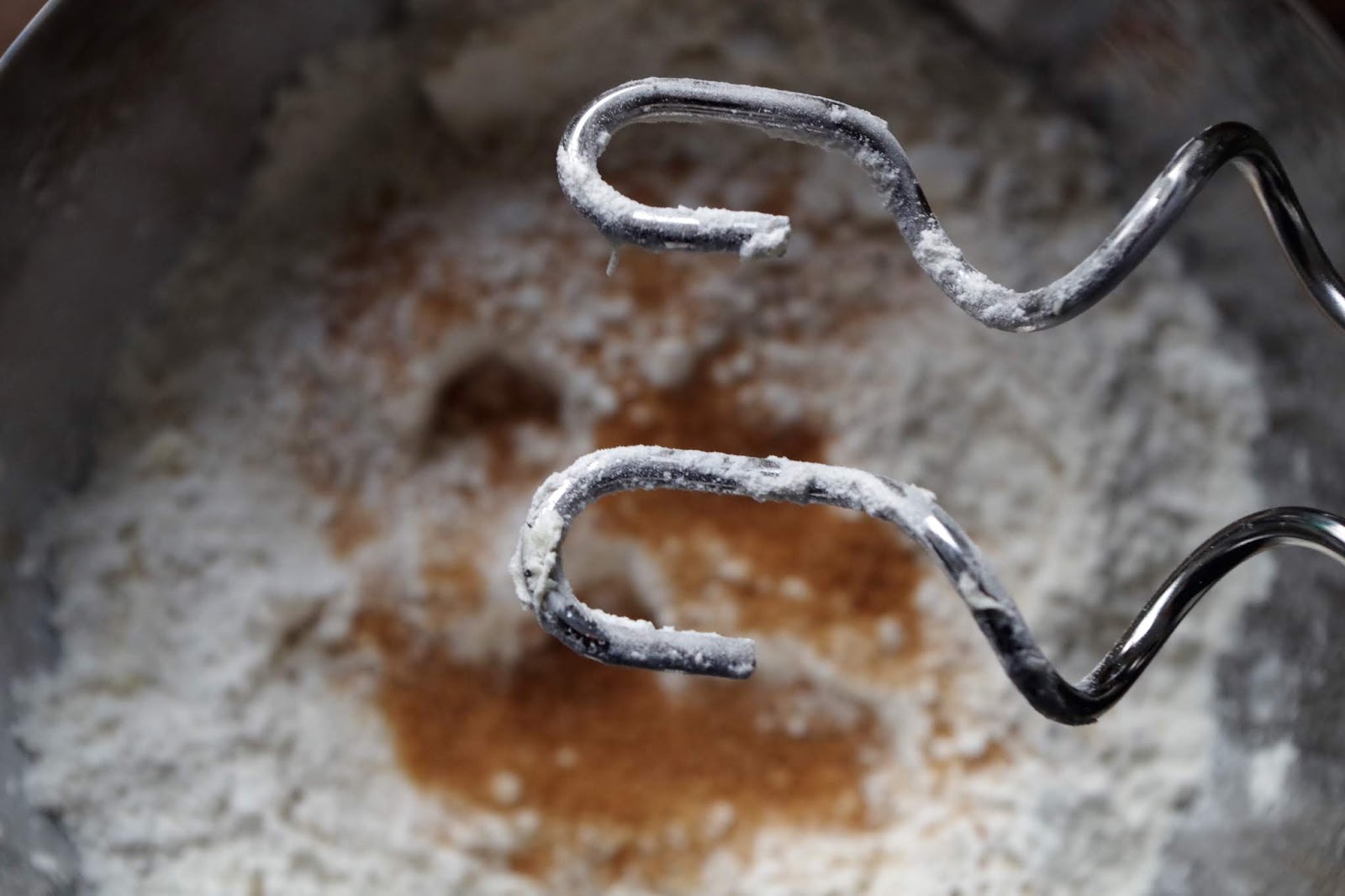
In a large bowl, beat the eggs with the sugar until fluffy.


Add flour, salt and spices and mix with the melted butter to form a smooth dough.


Line a springform pan (approx. 24 cm diameter) with baking paper. Pour in the dough...


...and then bake in a preheated oven at 350 °F (180 °C) upper and lower heat for about 25 minutes. (This time don't do a (!) toothpick test, the cake here should still be soft and sticky in the middle!)


Remove the cake from the oven and let it cool.

For the glaze, put the cream in a small saucepan and heat slowly.

Break the chocolate into pieces and let it melt in the warm cream, stirring constantly.


Finally stir in vanilla, cinnamon and butter.


Then pour the glaze over the cake and let it cool until the glaze has set.


Then serve the cake with lots of cream as dessert.


[Translated from here.]

Tuesday, December 10, 2019

Laufabrauð

Leaf bread


Laufabrauð is an essential part of Christmas in Iceland. In many families it is a nice pre-Christmas tradition to meet on one day in November or early December and all make Laufabrauð together and lovingly and individually decorate the dough flatbreads by hand with patterns before they are fried in hot fat.

There are special "Laufabrauðsjárn", i.e. "leaf bread irons", now often made of brass, with which you can "stamp" the patterns directly into the dough flatbreads using a small wheel. I still dream of having my own "Laufabrauðsjárn" - and until then I'll make do with a nice sharp knife.

This Laufabrauð recipe here comes from an old Icelandic cookbook by Jónina Sigurðardóttir from 1945 that I bought at the flea market in Reykjavík.


Ingredients

500 g flour
35 g butter
15 g sugar
1 tsp baking powder
250 g milk

500 ml vegetable fat


Preparation

In a large bowl, mix the butter and baking powder with the flour.


Add the sugar.


Heat the milk and pour it into the other ingredients...


...knead everything into a smooth dough. Then let the dough cool briefly.


Then divide into 12 - 14 portions. (In the original recipe there are 20 portions, but I can't manage to roll out the dough flatbreads that thin without accidents.)

Roll out each portion very thinly into a circle. (I used a saucer as a “template” and then cut off the excess edges with a knife.)


The rolled out flatbreads can then be stacked well using baking paper or greaseproof paper as an intermediate layer.

Use a sharp knife (or the Laufabrauðsjárn) to score patterns in the dough and carefully fold over the corners.


In a deep skillet or large pot, heat the fat until it is hot enough that bubbles form when you carefully dip a wooden stick into it.

Then fry each loaf of bread individually on both sides in the hot fat until it is nice and golden brown.


Then place the leaf bread on a flat surface, absorb the remaining fat with kitchen paper and, ideally, weigh it down a little so that the breadcrumbs keep their shape.


The leaf bread was then traditionally served in Iceland at Christmas with hangikjöt and pickled sheep meat. But it also tastes wonderful without everything and is now often simply eaten as a snack.


With that in mind - Merry Christmas! Gleðileg jól!


[Translated from here.]

Friday, December 6, 2019

Jólakyrís með smjörkexum

Christmas skyr ice cream with butter cookies


The last time I baked my Smjörkex (butter biscuits) I didn't turn out well, I had a different butter than usual (with lard in it) - and the result was biscuits that were so soft that they crumbled completely when I bit into them. I then processed the failed cookies with a lot of spices into this Christmas Skyr ice cream, which would have been a shame after all!


Ingredients

450 g vanilla skyr
250 g whipping cream
3 egg yolks
150 g brown sugar
1 pinch of ground vanilla
2 tsp gingerbread spice or similar
1 tsp cinnamon
200 g butter biscuits
50 g white grated chocolate


Preparation

Mix the sugar with the egg yolk until foamy.


Beat the cream until stiff.


Crush the cookies and set aside 1/3 for decoration at the end.

Then add 2/3 of the cookies with the grated chocolate with the vanilla skyr and the spices to the egg yolk-sugar mixture and stir.


Add the whipped cream and fold in carefully.


Then put the mixture in a suitable form (glasses, a plastic mold or similar), sprinkle with the remaining biscuit crumbs and the remaining white chocolate and chill in the freezer for at least 3 hours.


Take the ice cream out of the freezer about 15 minutes before eating and then serve it slightly thawed.

Bon appetit!


[Translated from here.]

Monday, November 25, 2019

Ýsa í appelsínusósu

Haddock in orange sauce


Haddock is a fish typically found in Icelandic cuisine. Oranges and lemons, on the other hand, are imported and have not been available in Iceland for very long - so this dish lives from this "tension" between classic cuisine and modern influences. By the way, it doesn't require any salt, pepper or other spices and still doesn't taste a bit bland!


Ingredients for 2 people

1 kg fresh orange juice
1 lemon
1/4 tsp fresh ginger
4 haddock fillets, each 120 g
1 Tbsp potato flour
2 Tbsp water


Preparation

Peel an orange and cut the pieces into fairly small pieces, squeeze out the remaining oranges and lemons. Peel the ginger and grate it finely.


Add the orange juice, lemon juice and grated ginger to a large pan, stir well and heat until boiling.


Then cut the fish fillets into approx. 3 pieces...


...and add it to the boiling liquid and simmer at a slightly reduced heat for about 5 minutes.


Then carefully remove the fish from the pan and keep it warm.


Mix the potato flour with 2 tablespoons of water in a small glass and use it to thicken the orange sauce.

Then put the fish back in the sauce and serve with potatoes or rice - we had the classic Bankabygg, i.e. pearl barley!


[Translated from here.]