Showing posts with label dessert. Show all posts

Monday, September 15, 2025

Eplaskyr

Apple Skyr


Apple trees don't actually grow in Iceland. In the past, apples were therefore something very special, expensive, and had to be imported. Apples were perhaps a great luxury at Christmas. Therefore, many older Icelanders still associate the scent of apples with Christmas.

Today, you can basically buy apples in stores all year round, so they have become an integral part of many Icelandic dishes.

Here's my first autumn recipe for you: a quick, easy dessert – vanilla skyr with apple compote and chopped nuts. It's so simple and delicious; my husband and kids were absolutely thrilled to lick the very last bits out of their glasses at dinner.


Ingredients for 4 glasses

350 g apple compote
450 g vanilla skyr
60 g sugar
1 tsp vanilla sugar, ground vanilla, vanilla paste or similar.

whipped cream
chopped nuts


Preparation

In a large bowl, combine the sugar with the vanilla sugar, ground vanilla, vanilla paste, or similar. (I mixed the sugar with some vanilla paste and some ground vanilla.)


Stir in the vanilla skyr.


Finally, add the apple compote and mix with a spoon.


Pour the apple-skyr mixture into dessert glasses or similar.

Before serving, garnish to taste with whipped cream and chopped nuts, brittle, or similar.


Bon appetit!


[Translated from here.]

Wednesday, July 23, 2025

Súrmjólkurbúðingur

Sour milk pudding


Today I have a recipe for sour milk pudding for you - in the past this dish (sometimes also known as Áfabúðingur) was actually a very popular Christmas dessert in Iceland.

The dessert was usually served with jam, fresh fruit or raisins and chopped almonds .

It is a traditional Icelandic dish - online you can find a recipe for sour milk pudding in an Icelandic weekly magazine from December 1939, in an article about milk and milk dishes by Helga Sigurðadóttir (1904 - 1962).

Helga, along with her aunt Jónína Sigurðardóttir (1879-1962), was actually the most famous Icelandic cook, cooking teacher, and cookbook author. Both revolutionized Icelandic cuisine in their own way, encouraging Icelandic housewives to grow their own fruit and vegetables and use them more frequently in the kitchen.

Helga was also the first director of Húsmæðrakenneraskóli Íslands, the Icelandic Teacher Training Institute for Housewives, founded in 1942. From 1930 onward, she published numerous Icelandic cookbooks, including "Matur og drykkur" in 1946. For decades, the book became the "matarbiblía okkar Íslendinga", the Icelanders' cooking bible and the most important reference work for recipes and home economics.

By the way, the cookbook was reissued in its original form in the summer of 2009 - I have a copy of it at home, too!


Ingredients for 4 servings

500 ml sour milk
80 g sugar
1 pinch of vanilla / vanilla sugar
3 - 4 Tbsp cold water
7 sheets of gelatin
150 ml whipped cream
2 - 3 Tbsp jam
2 Tbsp chopped almonds


Preparation

Soak the gelatin in cold water for about 10 minutes.


Then squeeze the gelatin leaves well...


.... and heat gently in a water bath or in the microwave.

In a bowl, mix the sour milk with the sugar and the ground vanilla or vanilla sugar.


Add the sour milk mixture to the warm gelatin spoon by spoon, stirring thoroughly.


Finally, whip the cream until stiff...


... and fold into the sour milk mixture.


Pour the sour milk pudding into the dessert glasses and let it set in the refrigerator for 4-5 hours.


Then heat the jam until it melts, then decorate the pudding with the still-liquid jam, the chopped almonds, and, if desired, some fresh fruit.


Bon appetit!


[Translated from here.]

Saturday, June 28, 2025

Rabarbarapæ

Rhubarb pie


Today I have a recipe for a very simple and delicious Icelandic rhubarb cake for you.

In our original homeland Germany, the rhubarb harvest begins in April and traditionally ends at the end of June. An old farmer's rule states that no more rhubarb should be harvested after St. John's Day (June 24th). This rule has the following background: The high temperatures cause the oxalic acid content in rhubarb to rise. And too much oxalic acid is unhealthy for humans. However, this has nothing to do with the rhubarb flowering, which often begins around this time; there is probably no connection between flowering and rising oxalic acid levels. One also often reads that the plant needs a rest period after the harvest from the end of June onwards to gather enough strength for a good harvest the following year.

In Icelandic cuisine the rhubarb season on the island usually begins in early June and practically lasts throughout the summer. I have no idea whether the plants here don't need a rest period, or whether the longer dormancy period during the Icelandic winter compensates for this.

The temperatures in the Icelandic summer are probably not so high that the oxalic acid concentration in the rhubarb becomes too high, but you often read the tip to use an extra tablespoon of sugar for rhubarb that is harvested at the end of summer, because the rhubarb also becomes more acidic as the season progresses.


So this is my last rhubarb recipe in Germany for this year - and I'm looking forward to having fresh rhubarb again when we fly to Iceland next week!


Ingredients for about 6 servings

500 g rhubarb
1 tbsp sugar
200 g melted butter
180 g white sugar
1 tsp baking powder
120 g wheat flour
1 tsp ground vanilla
2 eggs


Preparation

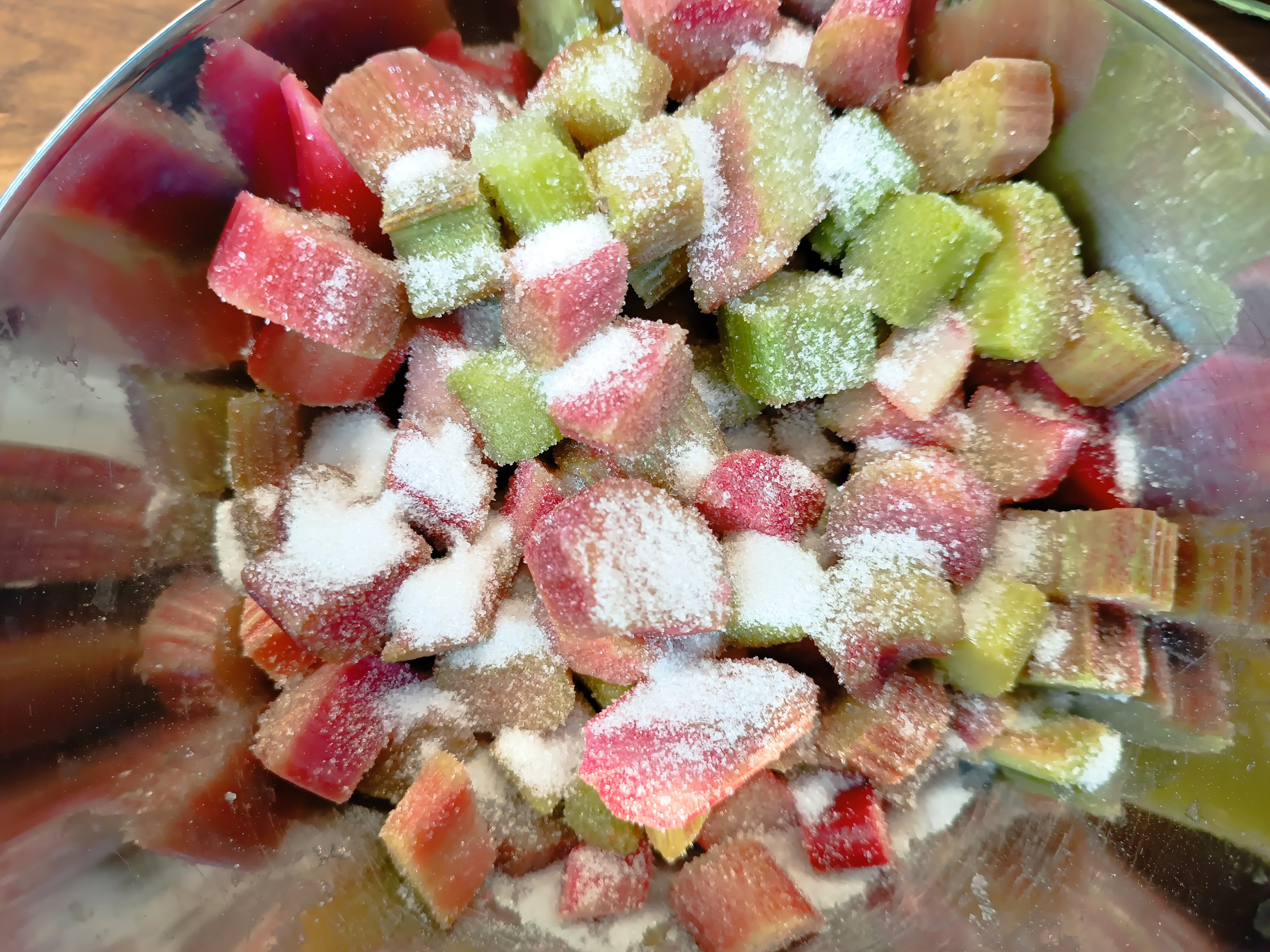
Wash and trim the rhubarb, cut it into slices about 1/2 inch (1-2 cm) thick, and place it in a baking dish. Sprinkle with 1 tablespoon of sugar, stir, and let it stand briefly while you prepare the dough.


In a bowl, mix the melted butter with the sugar, flour, baking powder and vanilla.


Add the eggs and whisk thoroughly.


Pour the batter over the rhubarb.


Then bake the cake in a preheated oven at 350 °F (180 °C) upper and lower heat for about 30 minutes until the cake is golden brown (toothpick test!).


Let cool slightly and then serve with whipped cream or vanilla ice cream or both.


Bon appetit!


[Translated from here.]

Monday, June 2, 2025

Skyrís með jarðarberjum

Skyr ice cream with strawberries


You don't need an ice cream maker for this ice cream - the fresh egg yolk, mixed with plenty of sugar, gives the skyr ice cream a lovely soft, creamy consistency without the formation of hard ice crystals.

Of course, you always have to be careful when using raw eggs, so I bought really fresh eggs and we quickly ate the ice cream - made it on Friday and it was all gone by Sunday!

Given the heat here in Germany yesterday, the ice cream was perfect. My grandchild was initially apprehensive – I made the ice cream in a loaf pan, lined with baking paper, and then cut it into slices for serving. My grandchild thought that was really strange at first – a slice of ice cream…?!? But then she tried it anyway and decided it was her new favorite ice cream! Well, I'm so glad to hear that!


Ingredients

4 egg yolks
200 g brown sugar
1 organic lemon
400 g pure skyr
1/2 tsp vanilla paste
3 tbsp strawberry jam
200 ml whipping cream

fresh strawberries for decoration


Preparation

Whip the cream in a tall container until stiff.


Wash and dry the lemon and mix the peel with the sugar in a large bowl.


Then beat the egg yolks with the sugar until frothy.

Add the skyr, vanilla paste and strawberry jam and mix well.


Carefully fold the stiffly whipped cream into the skyr mixture.


Then pour the ice cream mixture into a loaf pan lined with baking paper, smooth it out and place it in the freezer for at least 4 hours until the ice cream is frozen.


Then cut the ice cream into slices and serve with fresh strawberries.


Bon appetit!


[Translated from here.]

Sunday, May 25, 2025

Gamla góða rúg­brauðstertan

Traditional rye bread cake


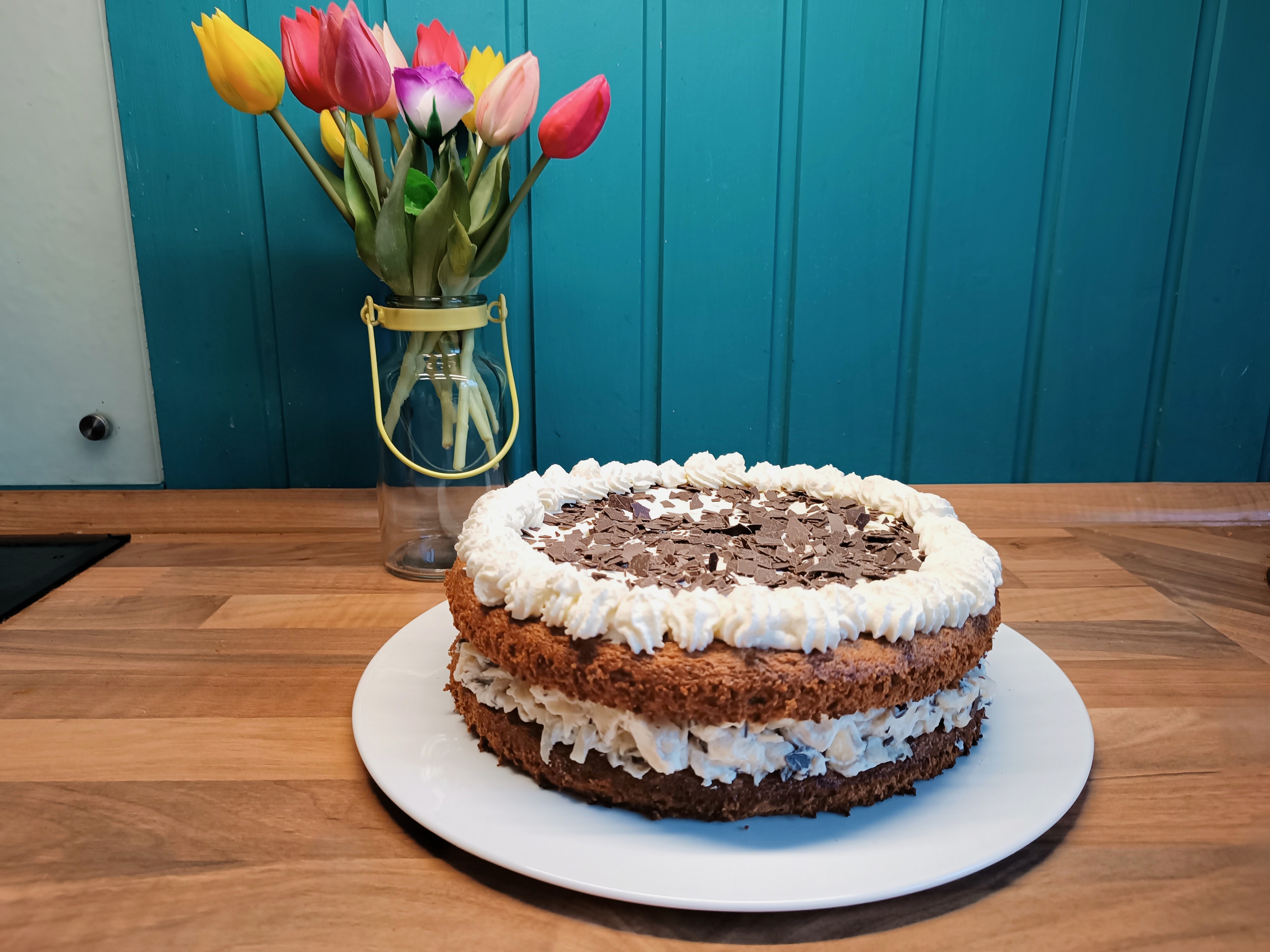
I love rúgbrauð, that heavy, sweet, moist Icelandic rye bread. It tastes so delicious - and you can also use it for other things, like a rye bread cake.

Here on the blog, I've already tried and presented various typical Icelandic rye bread cakes - today I have another recipe for you. I found this recipe online, in an old article in the magazine Morgunblaðið from December 1967.

For the cake, apart from the Rúgbrauð, you mainly need eggs, sugar, some flour and a bit of potato flour, and the filling consists of cream, bananas, apples and grated chocolate.

Since I didn't want to bake Icelandic rye bread specifically for the cake in Germany, I used pumpernickel for the recipe and I think the result is really good!


Ingredients

4 eggs
200 g sugar
125 g pumpernickel
1 tbsp potato flour
60 g flour
1.5 tsp baking powder

2 bananas
2 apples
1/2 lemon
50 g grated chocolate
200 ml whipping cream

300 ml whipping cream
chocolate to taste


Preparation

Preheat the oven to 400 °F (resp. 200 °C) upper/lower heat.

Separate the eggs.


Mix the egg yolks with the sugar in a large bowl.


Chop the pumpernickel thoroughly...


...and mix with the flour, potato flour and baking powder into the egg-sugar mixture.


Beat the egg whites until stiff and carefully fold in.


Carefully fold the beaten egg whites into the remaining ingredients.


Pour the dough into two springform pans lined with baking paper (approx. 8 inches resp. 20 cm diameter)...


...and bake at 400 °F (200 °C) for about 10 to 15 minutes. Then let cool thoroughly and carefully remove from the springforms.


For the filling, wash, peel, quarter and finely grate the apples.


Cut the bananas into small pieces.


Whip the 200 ml of cream for the filling until stiff and mix with the grated apples, the banana pieces and the grated chocolate.


Place the first layer on a cake plate or similar and spread the filling evenly over it.


Then place the second layer on top, whip the remaining cream until stiff and decorate the cake as desired.


Serve the Rúgbrauðsterta well chilled.


Bon appetit!


Translated from here.]