Monday, October 12, 2015

Berjahlaup

Berry jelly


In autumn you can find a lot of berries in Iceland, especially in heathlands - especially small blueberries (Aðalbláber), crowberries (Krækiber) and stoneberries (Hrútaber), although sometimes you have to look closer to see the berries. You can also collect rowan berries - they are definitely very healthy when cooked and are a good source of vitamin C!
Hrútaber - stoneberry

It's definitely worth collecting berries and cooking "hlaup" from them, so to speak "jelly".


Ingredients

1 kg of berries
Water
500 g sugar


Preparation

Wash the collected berries and put them in a pot with the stems and stems. Then pour in enough cold water so that the berries are about half covered with water. Then cook the berries for around 20 minutes.


Then pour everything through a sieve lined with a muslin diaper or something similar, let it drain thoroughly and, if necessary, wring it out a little more.

Then put the reserved liquid back into a saucepan, add the sugar and let the whole thing cook again over high heat for about 20 minutes.


Then pour the jelly directly into jars that have been freshly rinsed with boiling water and close the jars.

By the way, Icelanders like to eat their jam bread with cheese.


[Translated from here.]

Sunday, October 11, 2015

Blog event "Hnoðmör"

Kneaded fat


Kneaded fat ("hnoðmör" or also called "mörflot") is a typical Icelandic specialty that originally comes from the Westfjords, but has now spread throughout Iceland.

The fat is separated from the stomach of the freshly slaughtered sheep as intact as possible and then processed further.

Traditionally, melted kneaded fat is served on December 23rd with the "Þorláksmessa" as a side dish to the "Gammelray" ( kæst skata ), but knead fat is also used in traditional dishes from the Westfjords such as pounded fish (here in Germany you can use the knead fat at the pounding fish). Help fish with lard).

In the Westfjords, a St. Andrew's Cross used to be carved into one side of the finished pieces of plasticine - it was probably a religious-magical custom, a kind of "protective symbol" against evil spirits. The older people probably still say today that this was to prevent the devil from getting into the dough...

Saga Museum, Reykjavik

So, now I'm starting my blog event - I'm trying to make my own kneaded fat. But I still have no idea whether it will work!

I received the following instructions in Iceland from an experienced cook from the Westfjords:

The fat is kneaded and formed into "dumplings", which are then left to firm up a little overnight. The next day, the dumplings are individually wrapped in pieces of linen or gauze and hung on the terrace or somewhere as windy as possible but at the same time somewhat protected from the rain.

The whole thing is left hanging in the cloth bags for 6 to 8 weeks until the fat has turned blue-green and hairy. (If it's too cold outside and the fat doesn't get furry enough, it's best to bring it back into the kitchen for 2-3 days to let it "ripen".)

The blue-green, furry-hairy fat is then chopped up, kneaded well and formed into cubes of about half a pound and then stored in a cool place.


So I start my attempt:

Sunday, October 11th

I knead my fat, shape it into dumplings,...


... wrap them in thin fabric...


...and tie the pieces of fabric.


Now the three bags are hanging on our terrace in as windy a place as possible, but at the same time somewhat protected from the rain.


To be continued - one way or another! :-)


Update after 48 hours...

The bags have now been hanging for about 48 hours - but nothing noticeable has happened yet!


Update after 3 weeks...

For Halloween, after about 3 weeks, an update from my three little ghosts - but nothing dramatic has happened yet, there are no blue hairs growing out of the fat bags yet...


Here's another detailed photo from broad daylight...


I then stopped the experiment - even after 6 weeks, my fat didn't grow any hair nor did anything turn greenish-blue, unfortunately it didn't work. Probably not cold enough and the fat is already too sterile... try again later!


[Translated from here.]

Wednesday, October 7, 2015

Svampbotnar með kremi

Airy base ("sponge base") with cream


Ingredients

450 g wheat
flour
2 tbsp potato flour
250 g sugar
2 tsp baking soda
1 Tbsp grated lime zest
180 g melted margarine
200 ml milk

For the cream

200 g mascarpone
250 g cream cheese
100 g powdered sugar
1 Tbsp grated lime zest
2 Tbsp lime juice


Preparation

Place all dry ingredients for the cake base in a bowl and mix together.


Add the melted margarine and milk and mix everything into a smooth dough.


Then put half of the dough into two small springform pans lined with baking paper...


...and bake in a well-preheated oven at 350 °F (180 °C) for about 20 minutes.

Allow the two bases to cool thoroughly and remove them from the mold.

For the cream, mix the mascarpone with the cream cheese, powdered sugar, grated lime zest and lime juice.


Spread some of the cream on one base.


Then place the second floor as flush as possible on top.

Then spread the remaining cream on the top and edge of the cake. Decorate with chopped walnuts, pistachios or similar if desired.


Put the cream-covered cake in the fridge and let the cream set and then serve.


[Translated from here.]

Monday, October 5, 2015

Súkkulaðikaka (án eggja)

Egg-free chocolate cake


Ingredients


300 g wheat flour
100 g potato flour
300 g sugar
3 tsp baking powder
4 tbsp cocoa
2 tsp ground vanilla
100 ml margarine
200 ml milk
 
Ingredients for the cream

40 g margarine
3 Tbsp baking cocoa
180 g powdered sugar
1 tsp ground vanilla
1 Tbsp cappucino powder
2 Tbsp hot water  


Preparation

Preheat the oven to 350 °F (180 °C) upper/lower heat.

Mix the flour with the sugar, baking powder, cocoa and ground vanilla in a large mixing bowl.
 

Melt the margarine and heat the milk.

Then mix the dry ingredients with the melted margarine and warm milk...


...and work into a smooth, supple dough.


Place the dough in a springform pan lined with baking paper and bake at 350 °F (180 °C) in the preheated oven for approx. 25 - 30 minutes until the dough is cooked through (stick test!).


Allow the cake to cool thoroughly.

For the icing, mix the powdered sugar with the cocoa and ground vanilla, add the cappucino powder...


...and carefully add the hot water. Then add the melted butter and stir until smooth.

Cover the cake with the icing and let it cool or solidify in the refrigerator.


Verði þér að góðu - bon appetit!


[Translated from here.]

Saturday, October 3, 2015

Skyreftirréttur med kírsuberjasósu

Skyr dessert with cherry jelly


I got to know and love this dessert, in this form and in a similar form, during my Icelandic vacation in the Westfjords in autumn 2015 and also came across it again in a cookbook with recipes from Northern Iceland.


Ingredients for 4 persons

120 g oatmeal cookies
70 g margarine
2 Tbsp cinnamon
450 g Skyr
2 tsp ground vanilla
4 Tbsp sugar
2 eggs
300 g cherry jelly


Preparation

Place the oatmeal cookies in a small, sturdy plastic bag (e.g. breakfast bag or similar) and crush thoroughly with a rolling pin.

Melt the margarine and mix with the crumbled cookies and cinnamon.

Then spread the mixture with tablespoons onto the bottom of the dessert glasses.


Then mix the skyr with the ground vanilla, sugar and eggs...


...and also put it in the dessert glasses.

Finally, add the cherry jelly to the skyr mixture and let it sit well in the fridge for at least 6 - 8 hours - then serve as dessert.


[Translated from here.]

Monday, September 21, 2015

Kartöflubuff

Potato pancakes


Ingredients

200g potatoes
100 g yellow peas
100 g grated Chester cheese
3 Tbsp oat flakes
1 tsp salt
1 tsp pepper

Oil for the pan


Preparation

Wash, peel and cut the potatoes into large pieces, then boil them in salted water until they are soft. Then let the cooked potatoes cool thoroughly.

Cook the half yellow peas with approx. 400 ml of water in a second pot over medium heat for approx. 1.5 hours until soft, then allow them to cool down a little.

Then put all the ingredients together in a bowl or mixing bowl...


...and use the mixer to form a smooth, sticky dough. Then put the dough in the fridge for another hour, as the pancakes will then be easier to fry.


Heat some oil in a pan, use a tablespoon to add the dough for the pancakes to the pan and fry them in batches. Fry on each side over high heat with enough oil until the underside becomes crispy brown, then turn over and fry the second side until crispy.


Then serve the potato pancakes with fresh salad and/or herb quark (skyr).


[Translated from here.]

Ástarpungar

Love balls


Ástarpungar is translated quite literally as “loveballs” in English. In the supermarket, these “loveballs” are often advertised as a typical Icelandic specialty - which of course they are!

"Ást" means "love" and "pungur" means something like "sack" or "bag", although the word is also used for the male anatomy - just like "balls" in English. Um, yes, understandable, based on the look, but did I really want to know that exactly?!?

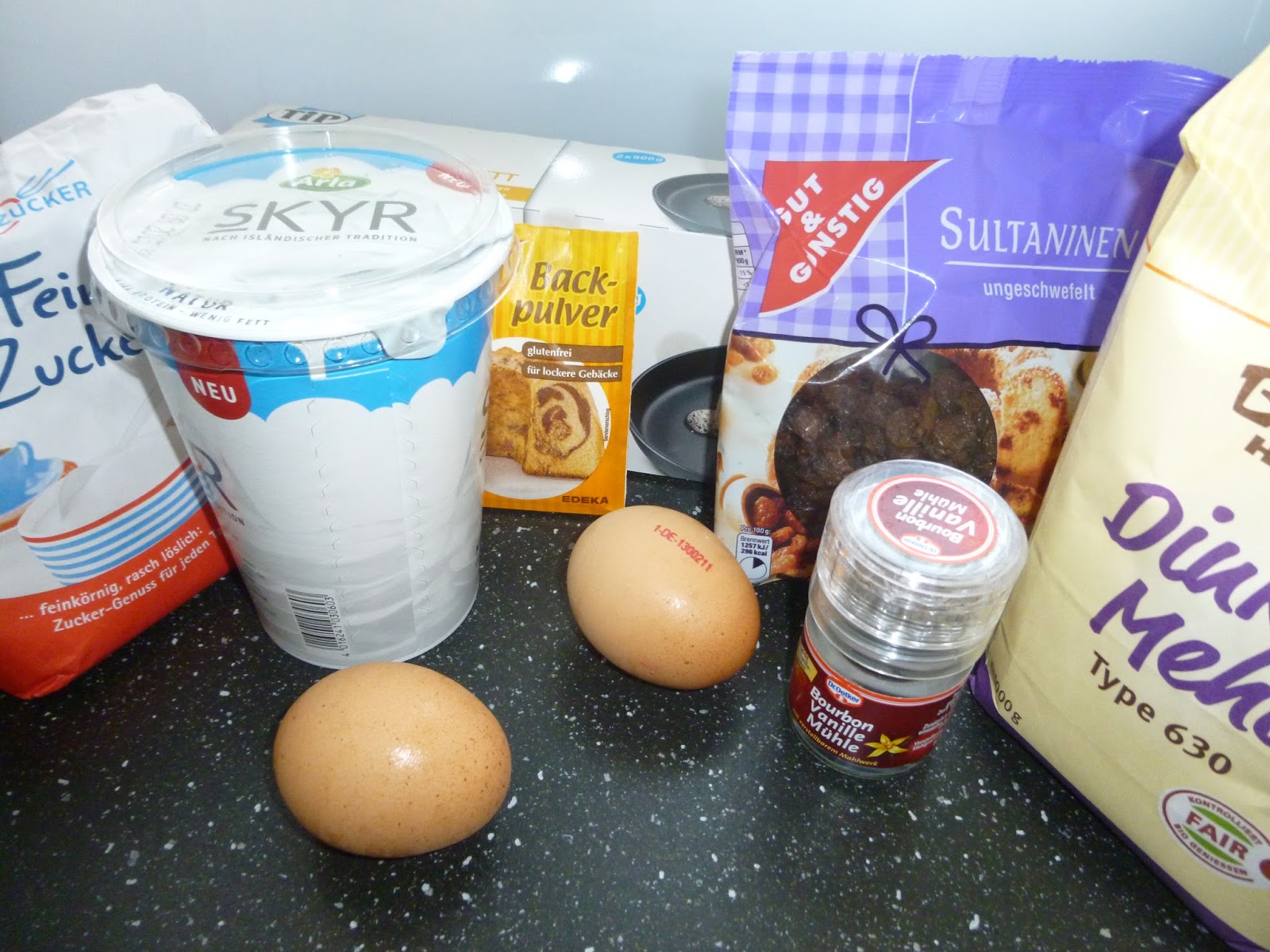
Ingredients for approx. 30 balls

2 eggs
240 g sugar
900 g flour
2 tsp baking soda
1 tsp vanilla
1 tsp cardamom
180 g Skyr
100 g raisins

1 kg vegetable fat for deep-frying  


Preparation

In a large bowl, beat the eggs and sugar until frothy.

Add flour, baking powder, vanilla, cardamom and Skyr and mix and knead everything thoroughly.

Finally add the raisins and knead them in.


Using your hands, form walnut-sized balls out of the dough.

Heat the vegetable fat in a high pot.

Then place the balls (in portions of between 4 and 6 balls at a time, depending on the size of the pot) into the hot vegetable oil and deep-fry for about 4 minutes, turning regularly so that the love balls become golden brown on all sides.


Then carefully remove the balls from the fat with a ladle and let them drain on kitchen paper.


Ástarpungar taste good warm and cold!


[Translated from here.]